Introduction
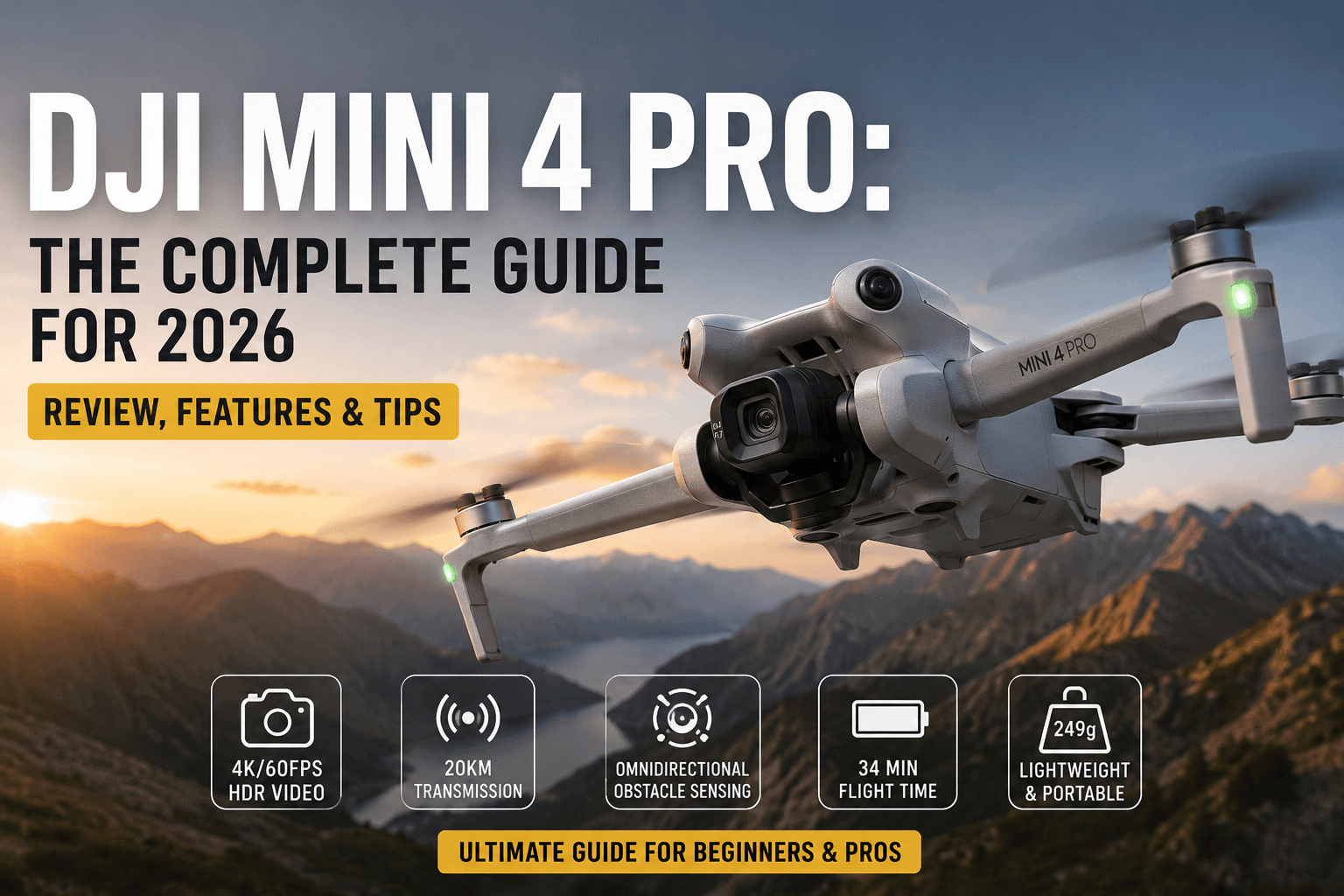
If you are looking for the best compact drone on the market right now, the DJI Mini 4 Pro is a name you simply cannot ignore. This drone has taken the world of aerial photography and videography by storm, and for very good reason. It packs an incredible amount of technology into a tiny, lightweight body that weighs less than 249 grams — which means it avoids many of the strict drone registration requirements in countries like the United States, the United Kingdom, and most of Europe.
Whether you are a complete beginner picking up your first drone or an experienced content creator looking to upgrade your aerial footage, the DJI Mini 4 Pro has something genuinely impressive to offer. This guide covers everything you need to know about this drone in simple, easy-to-understand language so you can make the best possible decision.
What Is the DJI Mini 4 Pro?
The DJI Mini 4 Pro is a compact, foldable consumer drone made by DJI, the world’s leading drone manufacturer. It was released in late 2023 and quickly became one of the best-selling drones in its category.
The drone sits in DJI’s Mini series, which is specifically designed to offer professional-level features in a lightweight body that stays under the 249-gram regulatory threshold. The Mini 4 Pro is the most advanced drone in this Mini lineup to date, bringing features that were previously only found in DJI’s much more expensive professional drones. It is designed for anyone who wants to capture stunning aerial photos and videos without carrying heavy, expensive equipment or dealing with complex aviation regulations.
Key Specifications of the DJI Mini 4 Pro
Before we dive into the full review, it helps to understand the core specifications of the DJI Mini 4 Pro. The drone weighs just 249 grams, which is the magic number for avoiding registration requirements in many countries. It is equipped with a 1/1.3-inch CMOS sensor that can shoot 4K video at up to 100 frames per second, which is a truly impressive capability for a drone this small and lightweight.
The camera shoots 48-megapixel still images, and the drone supports 10-bit D-Log M color profiles, which gives professional video editors a lot of flexibility when color grading footage. The maximum flight time is approximately 34 minutes on a standard battery, or up to 45 minutes with the Intelligent Flight Battery Plus. The drone has a maximum transmission range of up to 20 kilometers using DJI’s O4 video transmission system, which provides a clear, stable live feed even at long distances.
Design and Build Quality
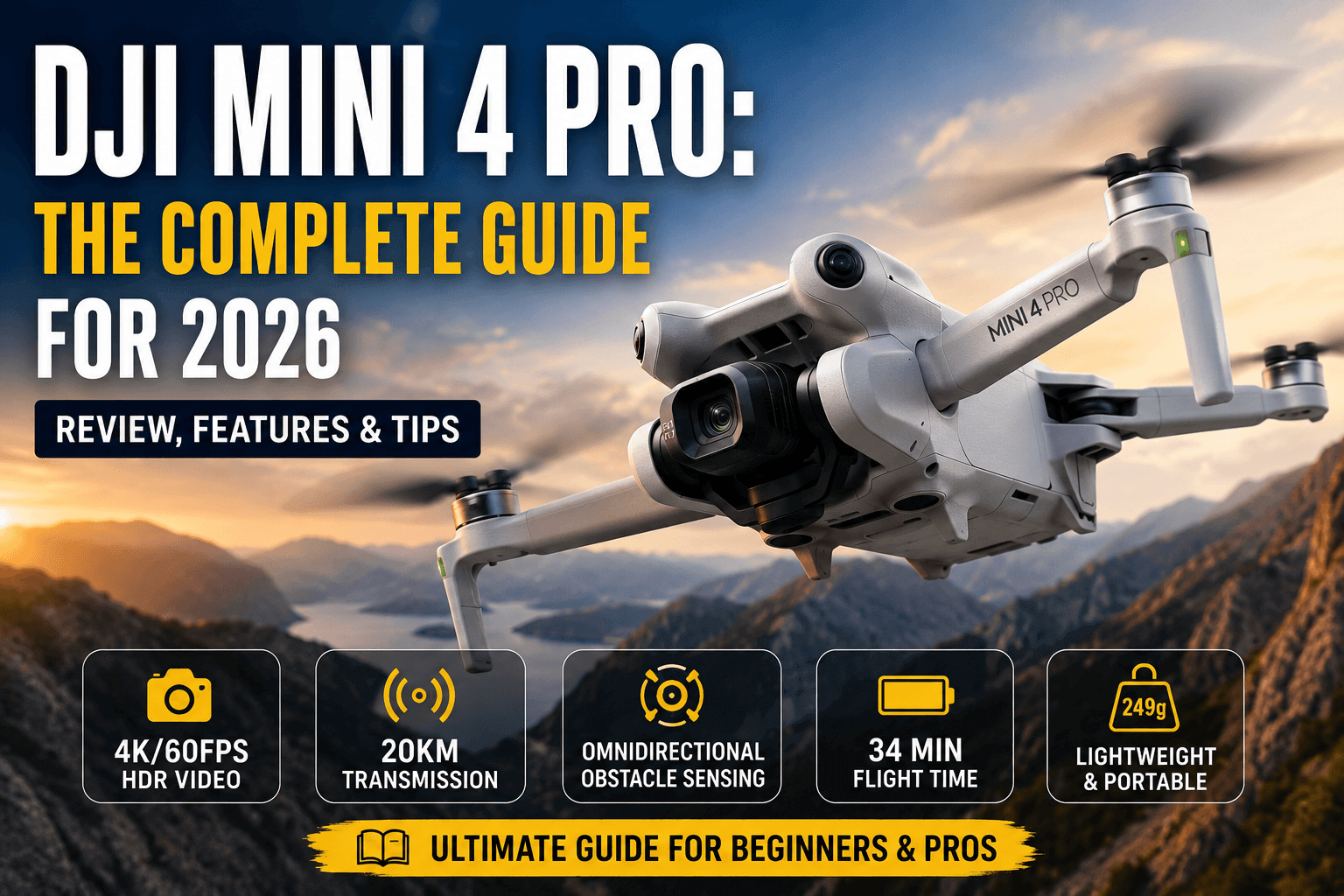
One of the first things you notice about the DJI Mini 4 Pro is how impressively small and well-built it is. The drone folds up into a compact form factor that fits comfortably in a jacket pocket or a small bag, making it genuinely portable in a way that larger drones simply are not. Despite its small size, the build quality feels solid and thoughtfully engineered.
The arms fold out smoothly and lock firmly into place, and the overall construction gives you confidence that the drone will hold up well to regular use. DJI has also added a new downward-facing LED indicator light on the Mini 4 Pro, which is helpful for orientation when flying at night or in low-light conditions. The controller options range from the standard RC-N1 controller to the RC2 smart controller with a built-in screen, giving you flexibility depending on your needs and budget.
Camera Quality — The Heart of the DJI Mini 4 Pro
The camera on the DJI Mini 4 Pro is honestly the biggest reason to choose this drone over its predecessors and competitors. The 1/1.3-inch sensor is significantly larger than what was available on the Mini 3 Pro, and that larger sensor size makes a real, visible difference in image quality — especially in low-light situations where smaller sensors tend to produce grainy, noisy footage.
The ability to shoot 4K at 100fps means you can capture incredibly smooth, cinematic slow-motion footage straight from a sub-250g drone, which was simply not possible at this level before. The 10-bit D-Log M color profile gives the footage a flat, low-contrast look straight out of the camera that is designed for post-production color grading, meaning professional editors can pull out incredible color detail and dynamic range in editing. For photographers, the 48-megapixel RAW image capability produces stunning detail that holds up even when cropped or printed large.
Obstacle Avoidance System
One of the most impressive upgrades in the DJI Mini 4 Pro compared to previous Mini drones is the obstacle avoidance system. The drone features omnidirectional obstacle sensing, meaning it can detect obstacles in front, behind, to the sides, above, and below. This is a massive safety improvement over the Mini 3 Pro, which only had forward, backward, and downward sensing.
The omnidirectional system uses a combination of vision sensors and downward infrared sensors to build a picture of the environment around the drone and slow down or stop automatically when it detects an obstacle in its path. This makes the DJI Mini 4 Pro much safer to fly in complex environments like forests, urban areas, and narrow spaces, and it gives beginners a much more forgiving learning experience.
Flight Performance and Stability
The DJI Mini 4 Pro performs excellently in terms of flight stability and responsiveness. In calm conditions, the drone hovers almost perfectly still with minimal drift, which is essential for capturing sharp, stable photos and smooth video footage.
In windy conditions, the drone handles surprisingly well for its size — it can handle wind speeds of up to 10.7 meters per second (Level 5 winds) while maintaining stable flight and a steady camera feed. The control response feels precise and smooth, which makes it pleasant to fly for both beginners and experienced pilots. The sport mode unlocks a top speed of around 57 kilometers per hour for situations where you need to track fast-moving subjects or simply enjoy flying at higher speeds.
Intelligent Flight Modes
The DJI Mini 4 Pro comes loaded with intelligent automated flight modes that make it easy to capture cinematic shots even if you are not an experienced pilot. The ActiveTrack 360 mode allows the drone to automatically follow and film a moving subject while orbiting it, creating the kind of dramatic circular tracking shot that used to require significant flying skill. Hyperlapse mode captures stunning time-lapse sequences from the air.
MasterShots automatically plans and executes a complex sequence of cinematic maneuvers around your subject and combines them into a polished video. Spotlight mode locks the camera onto a subject while you fly the drone freely around it. QuickShots include Dronie, Helix, Rocket, Boomerang, Asteroid, and Circle — all of which are one-tap automated moves that produce impressive, social-media-ready footage with almost no skill required.
Battery Life and Charging
The battery life of the DJI Mini 4 Pro is genuinely impressive for a drone this small. The standard Intelligent Flight Battery provides up to 34 minutes of flight time, while the larger Intelligent Flight Battery Plus extends that to approximately 45 minutes.
In real-world conditions with wind and active flying, you can typically expect around 25 to 30 minutes on a standard battery and around 35 to 40 minutes on the Plus battery, which is still excellent. The drone supports 30-watt fast charging, which can charge the standard battery from empty to full in approximately 70 minutes. If you are planning a full day of shooting, carrying two or three batteries is a good idea so you can keep flying throughout the day without long charging breaks.
DJI Mini 4 Pro vs DJI Mini 3 Pro
Many people trying to decide on a drone ask how the DJI Mini 4 Pro compares to its predecessor, the Mini 3 Pro. The Mini 4 Pro wins in almost every category. The camera sensor is larger, the video capabilities are more advanced (4K/100fps vs 4K/60fps), the obstacle avoidance is now omnidirectional rather than three-directional, the transmission range is longer with the newer O4 system, and the ActiveTrack feature has been significantly improved. The Mini 3 Pro is still a good drone, and it is now available at a lower price since the Mini 4 Pro launched, but if you are buying a new drone today and want the best performance and features available in a sub-250g package, the DJI Mini 4 Pro is the clear choice.
Who Should Buy the DJI Mini 4 Pro?
The DJI Mini 4 Pro is the right drone for a surprisingly wide range of people. If you are a beginner who wants a forgiving, easy-to-fly drone with professional image quality, this is an excellent first drone. The intelligent flight modes, omnidirectional obstacle avoidance, and stable flight characteristics make it very accessible for new pilots. If you are a travel photographer or videographer, the lightweight, foldable design means you can take it anywhere without it becoming a burden.
If you are a social media content creator, the QuickShots and intelligent tracking modes make it easy to create impressive, engaging content quickly. And if you are a professional looking for a lightweight B-camera drone for client work, the 4K/100fps footage and 10-bit color profile make it a serious tool for professional use.
Price and Value for Money
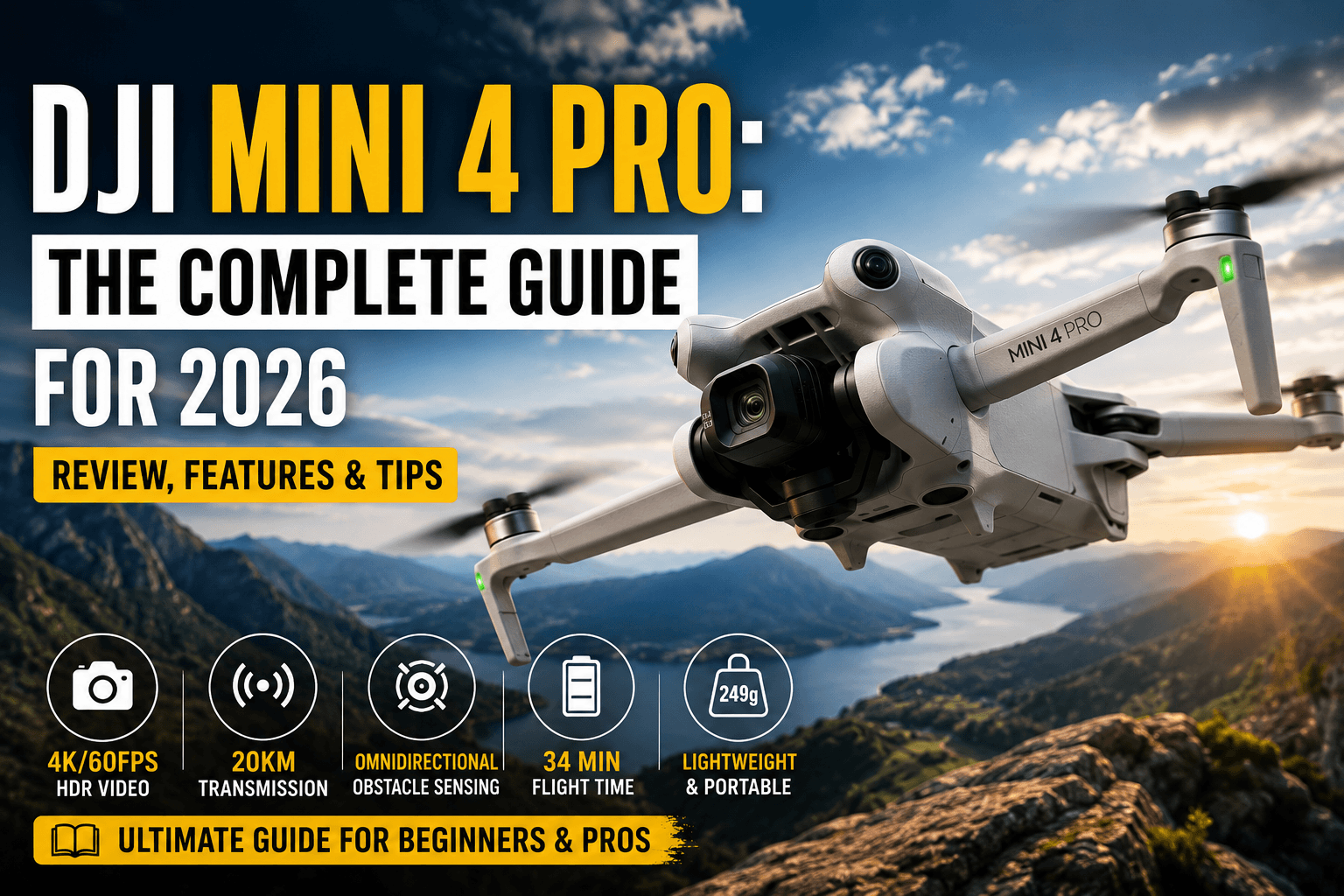
The DJI Mini 4 Pro is priced at approximately $759 for the standard combo (which includes one battery and the RC-N1 controller) or around $959 for the Fly More Combo (which adds extra batteries, a charging hub, and a carrying bag) at the time of writing.
There is also a version available with the RC2 smart controller, which adds a built-in screen for better visibility in bright sunlight. The price is not cheap for a consumer drone, but when you consider what you are getting — a 4K/100fps camera, omnidirectional obstacle sensing, a 45-minute flight time, a 20km transmission range, and a sub-250g weight — the value is genuinely impressive. Compared to other drones with similar capabilities, the DJI Mini 4 Pro is very competitively priced.
Tips for Getting the Best Footage with DJI Mini 4 Pro
Getting the most out of your DJI Mini 4 Pro takes a little practice and some good habits. Always shoot in 4K resolution even if you plan to deliver footage in 1080p, because the extra resolution gives you room to crop and stabilize in post-production.
If you are serious about video quality, shoot in D-Log M color profile rather than the standard color modes, because it preserves more dynamic range and color information for editing. Use ND filters on bright sunny days to control your shutter speed and achieve the natural motion blur that makes video look cinematic. Plan your shots before you take off so you use your battery time efficiently. And always pre-fly the area on a map to check for restricted zones before heading out.
DJI Mini 4 Pro and Regulations
One of the biggest practical advantages of the DJI Mini 4 Pro is its weight. At exactly 249 grams, it falls just under the 250-gram threshold that triggers mandatory registration requirements in many countries. In the United States, drones under 250 grams do not need to be registered with the FAA for recreational use. In the United Kingdom and the European Union, the sub-250g weight also unlocks more favorable operating categories.
This does not mean you can fly anywhere without rules — you still need to follow local airspace rules, avoid restricted zones, never fly over crowds or beyond visual line of sight without appropriate authorization, and always check the relevant aviation authority’s rules for your country before flying.
Common Complaints and Limitations
No drone is perfect, and the DJI Mini 4 Pro has a few limitations worth knowing about. The drone does not have a mechanical shutter, which means fast-moving subjects can sometimes show a rolling shutter effect in video. The zoom capability is digital only, maxing out at 4x, which means the image quality degrades significantly when zooming in. The drone can feel a little light and unstable in very strong wind conditions above Level 5.
The price is higher than that of some competing drones in this weight class. And some users have noted that the obstacle avoidance sensors can be overly cautious in some situations, stopping the drone when a safe path actually exists. These are relatively minor complaints in the context of everything this drone does well, but they are worth keeping in mind.
Final Verdict on the DJI Mini 4 Pro
The DJI Mini 4 Pro is, without question, one of the best drones ever made at its size and price point. It delivers professional-level image quality, advanced intelligent flight features, reliable obstacle avoidance, and an impressive battery life all in a package that weighs less than a can of soda.
Whether you are a beginner, a travel creator, a professional videographer, or simply someone who wants to experience the joy of aerial photography, this drone delivers an experience that is genuinely hard to fault. DJI has once again raised the standard for what a compact consumer drone can do, and the Mini 4 Pro represents the best of that standard yet. If you are in the market for a compact drone in 2026, the DJI Mini 4 Pro should be at the very top of your list.