Introduction
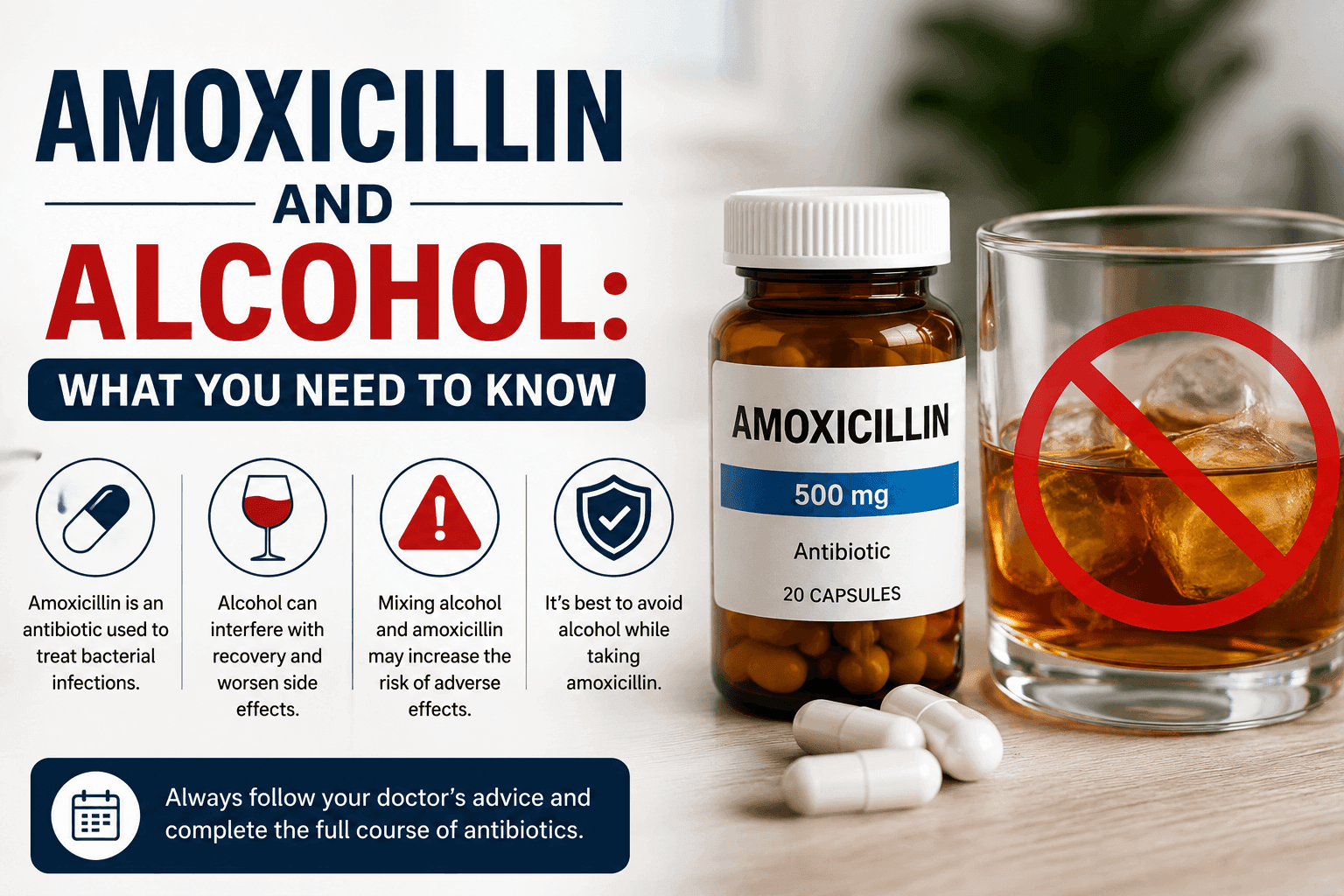
Mixing amoxicillin and alcohol does not cause a dangerous chemical reaction, but alcohol can worsen side effects like nausea and dizziness, and it may slow your recovery by weakening your immune system. Most doctors recommend avoiding alcohol until you finish your course of antibiotics.
You’ve just been prescribed amoxicillin, and the weekend is around the corner. Maybe you have a dinner party planned, or friends visiting. Naturally, the question comes up: Can I have a drink while taking this antibiotic?
It’s a question that comes up more often than you might think. Antibiotics are one of the most commonly prescribed medications in the United States, with healthcare providers writing roughly 235 million antibiotic prescriptions every year, according to the Centers for Disease Control and Prevention (CDC). And amoxicillin sits near the top of that list.
The short answer? A small amount of alcohol is unlikely to cause a dangerous reaction with amoxicillin specifically. But the longer answer is more nuanced—and worth understanding before you pour that glass of wine.
This article walks you through everything you need to know: what amoxicillin does, how alcohol interacts with it, whether it’s truly safe to drink while taking it, and how to get the most out of your treatment.
What Is Amoxicillin?
Amoxicillin is a broad-spectrum penicillin-type antibiotic used to treat a wide range of bacterial infections. Doctors commonly prescribe it for:
- Ear infections
- Sinus infections
- Strep throat
- Urinary tract infections (UTIs)
- Pneumonia
- Skin infections
- Dental infections
It comes in capsules, tablets, and liquid form, typically taken two to three times per day for 5 to 14 days, depending on the infection being treated. Amoxicillin is generally well-tolerated and is one of the most prescribed antibiotics for both adults and children.
How Does Amoxicillin Work?
Amoxicillin works by targeting the cell walls of bacteria. More specifically, it blocks the synthesis of peptidoglycan—a structural component that keeps bacterial cell walls intact. Without a stable cell wall, bacteria can’t survive or reproduce, which allows your immune system to clear the infection.
Because amoxicillin targets bacteria at a structural level, it doesn’t affect viruses. That’s why it won’t help with colds, flu, or COVID-19—those are caused by viruses, not bacteria.
Your body absorbs amoxicillin quickly, usually within one to two hours of taking it orally. It then circulates through your bloodstream to reach the site of infection.
What Happens When You Mix Amoxicillin and Alcohol?
This is where things get a little more complicated. Amoxicillin itself doesn’t chemically interact with alcohol the way some other antibiotics—like metronidazole or tinidazole—do. Those medications can trigger a severe reaction with alcohol, causing flushing, nausea, vomiting, and a rapid heart rate. Amoxicillin doesn’t carry that same risk.
That said, “no dangerous chemical interaction” doesn’t mean “no problem.”
Direct Interactions
Amoxicillin and alcohol are both processed by the liver and kidneys. When you drink while taking amoxicillin, your body has to manage two substances at once, which can slow the metabolism of the antibiotic slightly. This may affect how efficiently amoxicillin reaches the parts of your body where it’s needed most.
Additionally, alcohol can alter gut motility—how quickly food and liquids move through your digestive system. This can affect how your body absorbs amoxicillin, especially if you’re taking the liquid form.
Side Effects That Get Worse
Amoxicillin already carries a list of potential side effects. Drinking alcohol on top of it can amplify several of them:
- Nausea and vomiting – Both alcohol and amoxicillin can upset your stomach. Together, the effects may be stronger.
- Diarrhea – Amoxicillin disrupts gut bacteria. Alcohol adds further irritation to an already sensitive digestive system.
- Dizziness and headaches – Alcohol amplifies these common side effects, making you feel worse overall.
- Dehydration – Alcohol is a diuretic. Dehydration during an infection makes recovery significantly harder.
Is It Safe to Drink Alcohol While Taking Amoxicillin?
Technically, a single glass of wine or beer is unlikely to cause a serious problem if you’re taking amoxicillin. But “technically safe” and “a good idea” are two very different things.
Most healthcare providers recommend avoiding alcohol for the full duration of your antibiotic course. Here’s why: your body is already under stress from an active infection. Adding alcohol to the mix diverts energy and resources away from healing. It also increases the likelihood of experiencing uncomfortable side effects that may cause you to skip doses or stop treatment early—which contributes to antibiotic resistance, one of the most pressing global health challenges today.
Heavy or binge drinking while on amoxicillin is particularly ill-advised. Large amounts of alcohol can significantly interfere with your body’s ability to fight infection and recover fully.
Bottom line: If you have a short course of amoxicillin—say, five to seven days—it’s worth skipping alcohol for that window. Your body will thank you.
How Alcohol Affects Your Immune System and Recovery
Your immune system does its best work when you’re rested, hydrated, and nourished. Alcohol undermines all three.
Research published in Alcohol Research: Current Reviews found that heavy alcohol consumption impairs the immune system’s ability to fight off infections by reducing the production of key immune cells, including T-cells and B-cells. Even moderate drinking has been shown to temporarily suppress immune function.
Specifically, alcohol can:
- Disrupt sleep quality, which is when your body does much of its repair work
- Deplete vitamins and minerals essential for immune function, particularly zinc and vitamin C
- Cause inflammation, which can complicate recovery from a bacterial infection
- Increase the risk of secondary infections
When you’re on amoxicillin, you want your immune system working at full capacity. Alcohol reduces that capacity.
Common Side Effects of Amoxicillin
Even without alcohol in the mix, amoxicillin can cause side effects. Knowing what to expect helps you manage them effectively. The most common ones include:
- Nausea – Taking amoxicillin with food can help reduce stomach discomfort
- Diarrhea – A disruption to your gut microbiome is common with antibiotics; probiotic foods or supplements may help
- Rash – A mild rash can occur, particularly in people who are sensitive to penicillin
- Headache – Usually mild and temporary
- Vomiting – Less common, but more likely if taken on an empty stomach
In rare cases, amoxicillin can cause severe allergic reactions (anaphylaxis), including difficulty breathing, swelling of the face or throat, or hives. If you experience these symptoms, seek emergency medical care immediately.
What the Research Says
The existing research on amoxicillin and alcohol is relatively limited in terms of direct clinical studies, but the available evidence points in a consistent direction.
A 2020 review published in the British Journal of General Practice examined the evidence around alcohol and antibiotic interactions. It found that while amoxicillin doesn’t produce a direct pharmacological reaction with alcohol (unlike metronidazole or erythromycin), the indirect effects—particularly on immune function and side effect severity—provide good reason to avoid alcohol during treatment.
The NHS also advises patients to avoid alcohol while taking antibiotics, noting that it “may interfere with your antibiotic’s effectiveness and increase the risk of side effects.”
No major study has found a benefit to drinking alcohol while on amoxicillin. And several have reinforced the case against it. The consensus is clear: abstaining is the safer, smarter choice.
How Long After Taking Amoxicillin Can You Drink Alcohol?
Once you’ve taken your last dose of amoxicillin, how long should you wait before having a drink?
Amoxicillin has a half-life of about one to one-and-a-half hours, meaning it clears from your system relatively quickly. Most healthcare providers suggest waiting at least 48 hours after finishing your final dose before consuming alcohol. This gives your body enough time to clear the antibiotic and for your gut and immune system to begin stabilizing.
If your infection was severe or your course of antibiotics was longer than usual, giving yourself a full 72 hours is a reasonable precaution.
Tips for Taking Amoxicillin Safely
Getting the most out of your amoxicillin prescription means more than just swallowing your pills on time. Here’s how to ensure your treatment is as effective as possible:
- Take it at evenly spaced intervals. If your dose is twice a day, try to take it 12 hours apart. Consistency keeps the drug concentration in your blood stable.
- Finish the full course. Even if you feel better after a few days, stopping early can leave behind surviving bacteria—which may become resistant to the antibiotic.
- Take it with food. Food reduces stomach irritation and helps with absorption, particularly for the liquid form.
- Stay hydrated. Water helps your kidneys process the antibiotic and supports your immune system overall.
- Avoid alcohol. For all the reasons listed above.
- Store it properly. Liquid amoxicillin typically needs to be refrigerated. Capsules and tablets should be stored away from heat and humidity.
- Don’t share your prescription. Amoxicillin is prescribed for a specific infection at a specific dose. Sharing it with someone else—or saving it for later—can be harmful and is generally discouraged by healthcare providers.
When to Talk to Your Doctor
Certain situations call for a conversation with your healthcare provider before—or during—your amoxicillin course:
- You have a history of liver or kidney disease. These conditions can affect how your body processes both amoxicillin and alcohol.
- You’re taking other medications. Some drugs interact with amoxicillin, including blood thinners and other antibiotics.
- You’re pregnant or breastfeeding. Alcohol is best avoided entirely during pregnancy, and your doctor can advise on the safety of amoxicillin in your specific situation.
- Your symptoms aren’t improving. If you’re not feeling better after 48 to 72 hours on amoxicillin, contact your doctor. The antibiotic may not be the right fit for your infection.
- You develop severe side effects. Rash, difficulty breathing, or significant swelling warrants immediate medical attention.
Don’t hesitate to ask questions. Your healthcare provider wants you to understand your treatment.
Frequently Asked Questions (FAQs)
Can one drink of alcohol affect amoxicillin?
A single drink is unlikely to cause a dangerous reaction with amoxicillin. However, even small amounts of alcohol can worsen side effects like nausea and dizziness and may slow your recovery by affecting immune function. It’s safest to avoid alcohol entirely while on any antibiotic.
What happens if you accidentally drink alcohol while taking amoxicillin?
If you have one drink unintentionally, you’re unlikely to experience a severe reaction. Monitor for increased nausea, dizziness, or stomach upset. If symptoms become severe, contact your healthcare provider.
Does alcohol make amoxicillin less effective?
Alcohol may slightly affect the absorption and metabolism of amoxicillin, but the primary concern is that alcohol weakens your immune system and makes it harder for your body to recover from infection—which indirectly reduces treatment effectiveness.
Can I drink alcohol after finishing amoxicillin?
Most healthcare providers recommend waiting at least 48 hours after your final dose before drinking alcohol. This allows the antibiotic to fully clear your system and gives your body time to recover.
Is amoxicillin safer with alcohol than other antibiotics?
Amoxicillin doesn’t cause the severe “disulfiram-like” reaction that antibiotics like metronidazole or tinidazole can trigger with alcohol. However, that doesn’t mean it’s safe to drink. Alcohol still amplifies side effects and impairs recovery regardless of which antibiotic you’re taking.
What foods or drinks should I avoid while on amoxicillin?
Avoid alcohol for the duration of your treatment. Highly acidic foods and beverages (like citrus juices) may reduce absorption of certain formulations. Grapefruit is generally not a concern with amoxicillin, unlike with some other medications.
Final Thoughts
Amoxicillin is a well-established, effective antibiotic—but it works best when you give your body the conditions it needs to heal. Alcohol, even in moderate amounts, works against that process by stressing your liver, disrupting your gut, impairing your immune system, and amplifying unwanted side effects.
The good news? Most courses of amoxicillin are short. A week or two without alcohol is a small trade-off for a full and faster recovery. Once you’ve completed your treatment and given your body a couple of days to clear the antibiotic, you can return to your normal routine.
If you’re ever unsure about a medication interaction—whether it involves amoxicillin, alcohol, or something else entirely—your prescribing doctor or pharmacist is your best resource. When in doubt, ask.
Your health is worth the extra caution.